
“[Parlando’s] performance in Merkin Hall was packed and received enthusiastic applause at every turn; clearly it’s doing something right.”
“One of NYC’s most exciting chamber orchestras”
“Parlando has established itself as a serious player on the New York classical scene through its presentations of lesser-known, and modern(ish) pieces.”
Up Next
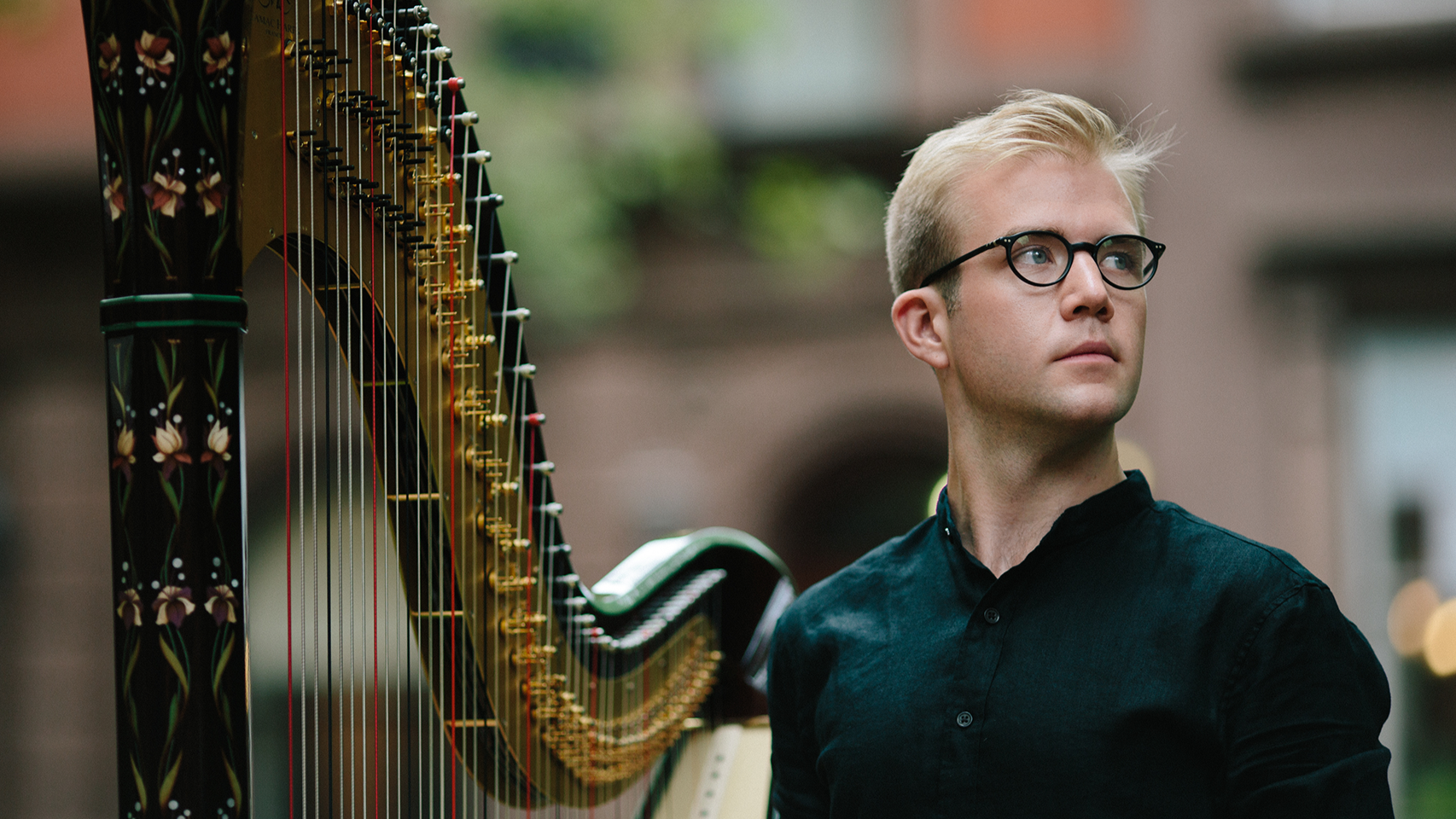
Cowboy Nations
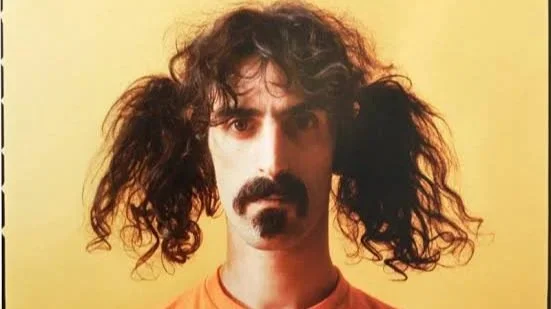
Zappa Files His Taxes
Subscribe to our Mailing List
follow
Latest News
Support Parlando

Censored Anthems
“"The story of Soviet music is often told as one of individual repression, but I became entranced by the idea of Soviet music as cultural resilience."
-Ian Niederhoffer
Parlando’s debut album, Censored Anthems, explores music’s power as a tool of cultural resilience in the face of Soviet censorship.
The album opens with a selection from Dmitri Shostakovich's Lady Macbeth of Mtsensk, whose party-authored scathing review was the first high-profile instance of Soviet musical censorship.

Following is the Concertino for Violin and String Orchestra by Mieczysław Weinberg, whose career was shaped by persecution during Stalin’s anti-cosmopolitan campaign. The American violinist Aubree Oliverson, acclaimed as a “masterful” soloist (San Diego Story), and celebrated for her evocative lyricism and joyful, genuine approach, is the featured soloist.
Armenian Composer Edvard Mirzoyan’s Symphony for String Orchestra closes the album, a testament to the resilience of the Armenian people in spite of Soviet cultural erasure.

Inspired by Parlando’s mission of integrating performance with historical and cultural storytelling, Censored Anthems tells the story of Soviet censorship through speaking directly to audiences. The final three tracks on this album are narrated by conductor Ian Niederhoffer, a spoken program note underscored with the exact music it describes. These three narrated tracks add the weight of history to this wonderful music and paint a more vivid, complete picture of the story of Soviet censorship and cultural resilience.

-
Praised by the New York Times for its “smart, unusual programming,” Parlando brings storytelling to the orchestral concert experience. The “razor-sharp chamber orchestra that exudes the joy of music-making” has quickly become an essential player in the New York classical music scene and is celebrated as “one of NYC’s most exciting chamber orchestras” (New York Classical Review). It was founded in 2019 by conductor Ian Niederhoffer, whose vision of every concert telling a story comes to life through his inventive programs and absorbing insights about the music.
Recognized for making “the classical world appealing to a broad audience while also honoring the listener’s intelligence and curiosity” (New York Classical Review), Parlando provides the musical and historical context to prepare the audience for the music through lively storytelling and short introductions to each piece. This way, the group bridges the gap between audience and performer to deliver engaging and memorable experiences.
Every Parlando program is joined by a common theme that forms a larger story arc, blending standard works with new or underrepresented music. When Parlando performs rarely-heard composers or works, the goal is to feature them not as a novelty but rather as part of a thematic program. By connecting each piece through the shared theme, the concert becomes a story. Parlando strives to leave every audience member knowing more about classical music than they did before the concert.
Since the first concert, in 2019, Parlando programs have used Niederhoffer’s “chili pepper system,” in which each “♪” symbol represents a level of listening difficulty, like chili peppers in a Thai restaurant menu. Paired along with the conductor’s spoken introduction, the rating system guides the audience into an inviting and activating concert experience.
-
Conductor Ian Niederhoffer stands out as a “charismatic, enthusiastic and articulate” leader, which, “together with his undeniable skills as a musician, makes for a winning combination” (New York Classical Review). Niederhoffer founded Parlando in 2019 with the vision of every concert telling a story. Through inventive programming, Parlando brings intimate and accessible orchestral experiences to wider audiences.
A BBC Music Magazine Rising Star for January 2024, Niederhoffer — the winner of three prizes at the 2021 Khachaturian International Conducting Competition — is a confident and expressive communicator of music, context, and ideas. Writing about his performance with Parlando of Beethoven’s Grosse Fuge, arranged for string orchestra, The Strad praised “the lyrical moments, [which were] played with shape and character.”
Niederhoffer has long been an entrepreneur dedicated to commissioning new music. Under his leadership, Parlando has commissioned new works by inti figgis-vizueta, Jerod Impichchaachaaha' Tate, Mason Bynes, and Anna Roberts-Gevalt. As a student at Yale University, Niederhoffer founded the Yale Undergraduate Chamber Orchestra, commissioning six new pieces and presenting a world premiere at every concert over his three-year tenure as music director. Yale honored Niederhoffer with the Wrexham Prize and the Joseph Lentilhon Selden Memorial Award for his “verve, idealism, and constructive interest in music.”
In 2021 Niederhoffer was named Artist of Promise at the Conducting Academy of the Verbier Festival, where he was assistant conductor for Lahav Shani, Daniel Harding, Antonio Pappano, and Gábor Takacs-Nágy. In 2019 and 2022 Niederhoffer participated in the Järvi Conducting Academy at the Pärnu Music Festival, an international conducting masterclass led by the world-famous family of conductors Paavo Järvi, Neeme Järvi, and Kristjan Järvi. His principal teachers include Leonid Grin, Toshiyuki Shimada, and William Boughton.
-
Praised for her evocative lyricism and joyful, genuine approach, young American violinist Aubree Oliverson is proving to be one of the most compelling artists of her generation, distinguishing herself with clear, honest, and colourful performances, which have been described as “powerful… brimming with confidence and joy” by the Miami New Times.
Acclaimed as a “masterful” soloist (San Diego Story), Aubree’s most recent solo appearances in 2023 include season openings of the Chamber Orchestra of New York at Carnegie Hall (di Vittorio), Utah Symphony at Abravanel Hall (Morlot), Peace Orchestra Project (Mengoli), and Ridgefield Symphony with a pairing of the Barber and Esmail violin concertos. Other season highlights include performances with the Royal Liverpool Philharmonic (Teychenné), Columbus Symphony (Miller), Orquesta Sinfónica de Navarra (Hoving), North Carolina Symphony (Prieto), Pacific Symphony (St. Clair), Des Moines Symphony (St. Clair), Amarillo Symphony (Jackson), Moldavian Philharmonic (Macek), Excelentia Madrid (Braunstein), Slovak Sinfonietta (Foron), Rousse Philharmonic Orchestra (Sachedina), New Haven Symphony (So), Puerto Rico Symphony (Valdés), and the Kontrapunktus Baroque Ensemble; in works by Brahms, Dvorak, Barber, Bruch, Korngold, Mendelssohn, Tchaikovsky, Weinberg, Haydn, Saint-Saens, Esmail, and Bach.
A dynamic recitalist and sensitive chamber musician, Aubree recently toured Europe with Jean-Yves Thibaudet, Clive Greensmith, and Tatjana Masurenko and collaborates this season with Anne Akiko Meyers and the Philharmonic Society of Orange County in duo works of Bach, Philip Glass, and Handel-Halvorsen. Other engagements include festivals such as the Aix-en-Provence Easter Festival with Gil Shaham, the Rome Chamber Music Festival, Oropa Music Festival, Moab Music Festival, ChamberFest West, and recitals at the Grand Teton Music Festival and SOKA Performing Arts Center, among many others. Ms. Oliverson has collaborated with world-renowned artists such as Robert McDuffie in Harris Hall at the Aspen Music Festival, Gil Shaham on tour in Mexico, Renaud Capuçon in France, Joseph Silverstein in Salt Lake City, and Lynn Harrell, Orli Shaham, Robert Chen, and Andrew Marriner in Los Angeles
About Us
Praised by the New York Times for its “smart, unusual programming,” Parlando brings storytelling to the orchestral concert experience. The “razor-sharp chamber orchestra that exudes the joy of music-making” has quickly become an essential player in the New York classical music scene and is celebrated as “one of NYC’s most exciting chamber orchestras” (New York Classical Review). It was founded in 2019 by conductor Ian Niederhoffer, whose vision of every concert telling a story comes to life through his inventive programs and absorbing insights about the music.
Recognized for making “the classical world appealing to a broad audience while also honoring the listener’s intelligence and curiosity” (New York Classical Review), Parlando provides the musical and historical context to prepare the audience for the music through lively storytelling and short introductions to each piece. This way, the group bridges the gap between audience and performer to deliver engaging and memorable experiences.
Every Parlando program is joined by a common theme that forms a larger story arc, blending standard works with new or underrepresented music. When Parlando performs rarely-heard composers or works, the goal is to feature them not as a novelty but rather as part of a thematic program. By connecting each piece through the shared theme, the concert becomes a story. Parlando strives to leave every audience member knowing more about classical music than they did before the concert.
Since the first concert, in 2019, Parlando programs have used Niederhoffer’s “chili pepper system,” in which each “♪” symbol represents a level of listening difficulty, like chili peppers in a Thai restaurant menu. Paired along with the conductor’s spoken introduction, the rating system guides the audience into an inviting and activating concert experience.